
Throwaway Style is a monthly column dedicated to spotlighting the artists of the Pacific Northwest music scene through the age-old practice of longform feature writing. Whether it’s an influential (or overlooked) band or solo artist from the past, someone currently making waves in their community (or someone overlooked making great music under everybody’s nose), or a brand new act poised to bring the scene into the future; this space celebrates the community of musicians that makes the Pacific Northwest one of a kind, every month from KEXP.
This month, Martin Douglas writes KEXP’s final edition of Throwaway Style as he wraps up his time with the organization. It is, in true Martin Douglas fashion, a look at his personal experiences being KEXP Editorial’s local music correspondent for nearly eight years. Martin is moving Throwaway Style to his Substack newsletter, Trick Bag, as a quarterly column. If you have enjoyed Martin’s writing about the Pacific Northwest music scene, please subscribe—because he doesn’t have any plans to discontinue this work.
“Martin Douglas, get your ass up here!”
At a Northwest rap superbill in 2023, at the end of the night, Greg Cypher corralled a couple dozen NW hip-hop luminaries for a group photo. Rappers, producers, photographers, videographers, a couple of managers. It was a cool sight, and I watched as the crowd onstage swelled.
It’s safe to say that I had been used to my role as a journalist; my given role as an observer, a witness. There was no part of me that expected Greg to single me out and say, “You’re a participant too, motherfucker!” In the aftermath of The Source’s heyday—and it’s only gotten worse—critics and journos have sort of been treated like scrubs by the artists. Not saying that I really ever needed the Tony Bourdain treatment, but I’ve worked pretty hard to tell the stories of the artists in this and other scenes.
In the words of the great Canadian folk hero Bret “the Hitman” Hart, “I’m not greedy for money, I’m greedy for respect.”
Earlier in the night, Milc evoked big John Belushi energy, being three sheets to the wind and bantering to the crowd. It reminded me of a time when music was freer, less professional. Now crowds—even rap crowds—judge you when you hit the stage shitfaced. Maybe it’s because those performers shit the bed and aren’t nearly as engaging as the man called Leché. He freestyles drunk better than most rappers can rap sober. He staggered and lumbered, and then he abruptly stopped. He once told me freestyling is like a comedian trying to find the bit.
After Greg called me out, I took a place far stage left as the photos snapped, smiling a big smile and throwing the peace sign among the many members of the Northwest rap scene. And me, somehow in the thick of it all, far from being a nobody who used to drive up to Belltown from Tacoma to go to shows by myself.
I’m on I-5 South and I’m about to lose my fucking shit!
I’ve been in my El Camino for an hour and forty-five minutes, it’s pouring down rain, and I’ve only just passed the 320th St. exit. The commute from Seattle Center to Northeast Tacoma is often brutal, but being in rush hour traffic to this extent makes me want to kick out the windows of my Chevy.
I’m quite used to driving up and down the I-5 Corridor at night. Back in the day, I went to shows at the old-old Crocodile or Neumos or Sunset Tavern or house parties at my friends’ Ryan and Darby’s place on 17th and E Denny. But I very recently got a job at KEXP, so I’m in Seattle a lot during standard office hours. Darby’s been driving around the country and occasionally writing about her travels. I haven’t spoken to Ryan in a couple years (nothing of my own doing), I’m in between situationships, my parents have been dead for a while, and I don’t have much going on in the way of a social life right now. These are the drab, grey days of early 2018.
But this KEXP gig seems promising. I’m working alongside Dusty Henry, a fellow journeyman of Seattle music journalism. Before becoming colleagues, we were pals on Twitter. I initiated it. I’ve loved the works of creative people basically my entire life, and I’ve made it a point to get in touch with people if I’m a fan of their work. Dusty was and is pretty much the only young-ish writer in the Northwest right now who consistently makes me say, “Oh, this is a great writer.” And one of the only writers of any age anywhere whose writing consistently makes me laugh.
A few weeks ago, Dusty wrote about a rapper from Tacoma called Bujemane, and during this depressing, rainy winter, I’ve been banging his music and pretending it’s summer. Pretending my windows are down. Rapping about choppers like I know anything about semiautomatic weapons. There’s something in the water in Tacoma’s rap scene right now, and I can’t wait to write about the scene bubbling up in my adopted hometown.
On my drives back and forth from Tacoma, I’ve got the aux hooked up to my very first smartphone. (I know, I know.) I’ve been listening a lot to this rap artist AJ Suede, apparently a recent Seattle resident. Dusty is the first person in town to write about him, at least to my knowledge. He put out an album last year, one of the best NW albums of 2017, Gotham Fortress. Suede is the first rapper in Seattle outside of Black Constellation in a pretty long while who has put out multiple releases I’ll throw on repeat.
I don’t remember who passed us the Hennessy.
Dusty and I were catching a vibe at the Fresh off the Spaceship party, summer of 2022. Stas THEE Boss is behind the decks, getting the sold-out crowd lit. Maybe Ish passed the bottle. Dusty joked about being the white guy at the party taking shots of Henny. But he can’t fool me. His wife and her entire family are Filipino. I know this is far from the first time someone has passed Dusty some Hennessy at the function.
About a year later, my lady made fun of me for getting starstruck while hanging out with Ish. I’m in social circles where I sometimes encounter the Palaceer, Butterfly, Ishmael Butler, the coolest human on Earth and likely all other planets. On this specific occasion, we were at a North Seattle spot that doesn’t exist anymore (like many spots in North Seattle, South Seattle, west and east of the freeway, etc. into infinity), a tapas place or something.
Larry was spinning records—that’s Larry Mizell Jr. for the uninitiated—and Ish came through to chill. He was talking to me about learning how to play bass and instead of continuing the conversation like a normal adult, like someone who has spoken to Ish many times, I completely lost my train of thought and just… giggled awkwardly?
My explanation to you is the same one I offered my partner: “In a professional context, I’m a professional. I can talk to Ish all day long if we’re conducting an interview. But I’ve never really just hung out with him before.”
Most of the artists I meet and talk to—whether professionally or otherwise—are just artists. People who make things I find value in; people who share my uncontrollable urge to create the art they want to see in the world. I’ve been dwelling in enough punk scenes to not put much credence into the invisible barrier between fan and artist. Ultimately, we’re all just people. Ish is something different. Even if he weren’t one of the greatest artists in any medium to ever come from this city, he’d still be the coolest motherfucker—”motherfucker” being a gender-neutral term, in the classic, Black sense of the word—in any room he stepped in.
Not that I put any amount of value in awards (including ones I’ve helped win) aside from being a notch on an artist’s CV, but Ish won a Grammy for writing a song about how cool he is.
Candles on my birthday cake
Make a wish, make me rich
[Smacks teeth] Wasn’t worth the wait
Now I can’t stay awake
I’ve never spent any amount of meaningful time with Porter Ray; never interviewed him, never gotten to kick it with him. He dapped me up at the FOTS party, an unforgettable sign of respect from one of the most graceful writers this region has ever produced since English started being written here.
As someone who has known a great deal about albums written and recorded in Seattle, I’m telling you directly that you’d be hard-pressed to find a finer “Seattle album” (in any genre) than Porter’s 2013 opus BLK GLD.
Maybe it’s because I overidentify with Porter’s lyrics. You see, dear reader, I too hold grief for a direct blood relative—a family member—who was shot to death on a street somewhere in Washington State. I too have spent late nights on Broadway, off Jackson, over in Leschi. I too had teenage dreams of being a rapper and hearing the shrieks from pretty ladies at my performances and being bestowed with the highest honor in hip-hop for many years: a five mic rating in The Source.
I often view my writing career as an extension—or rather, a maturation—of my rap dreams. So when Porter respects me for my writing, or other rap artists (by virtue of not wanting to outright brag and out of respect for their privacy) say I’m their favorite writer, I know I have done the work to validate my inner child. The kid who wrote 14-syllable rhymes in a spiral notebook while listening to a Jay-Z album, I tore the packaging off of and have poured through the album credits to read who made the beats and what songs they sampled.
One of my favorite rap albums of the decade is AJ Suede’s Darth Sueder V: Supreme Chancellor. I’m standing in front of Araya’s Place in the U District, buying the MPC Live on which Suede, I believe, made all of the beats from that project on. I made beats well over a decade and a half ago, and I keep flirting with playing music as a pandemic hobby, since it was 2021 and we still can’t really leave our houses to do things.
Araya’s remains takeout-only, and it’s one of the few vegetarian spots my lady and I will get for a special meal. So naturally, I went to get two things done at once: this purchase with Suede and getting lunch. Suede and I didn't talk very long (I already placed my order), but we had a nice little chat.
As you might know from reading the column for long enough, I’ve covered more or less every AJ Suede release since I took over the column in 2018. That’s anywhere from three to six projects a year. But to put it into perspective, three 25-minute albums (his pace as of late) is not a monopoly of my time, especially since I’m getting paid to cover the Northwest’s best music.
One of my proudest moments of 2025 was finally giving Suede the feature treatment. I’ve never featured an artist who didn’t really have a compelling story, but Suede’s upbringing, his approach to art, and his views on the business of music provided some of the best material I’ve gotten to write this year. We spoke in the food court of The Armory—after being kicked out of The Center School’s front area for “loitering” (aka “being Black men”)—which I initially thought was an unremarkable place to speak, until Suede told me about the handful of day jobs he had there when he first moved to Seattle.
I’m sure you can imagine the extent to which I’ve been thinking about the artist’s hustle as of late.
Around the time I was listening to DSV for days on end, I was beginning my life as a full-time writer. The pandemic was fresh, I was writing about music and pro wrestling, I was hitting hourlong drives on empty freeways to see my lady in North Seattle, I was freshly minted as the artist I’ve wanted to be since I was a kid, I had recently told my then-girlfriend (now fianceé) that I love her. I had known I loved her for a while.
“Wealth II” shimmered through my speakers on sunny, hot days; “Hold Paper Not Grudges” sparkled as the rain hit the windshield of my 2001 Nissan Altima during rain showers. “The Freeze” popped into my mind when walking near-deserted streets through the icewater drizzle of Seattle in winter, and occasionally the same song came up when the region was so hot that it set trees in the northern part of the state on fire.
Suede released a cassette run of Darth Sueder V and I had to have a copy. Suede put out his best album this year (The Duke of Downtempo) on vinyl through his own label Knowhatimean Inc. Of course, I bought a copy. Suede handling his business as a truly independent artist has long shown me the way, and I’ve been thinking about that more and more as the date comes closer to turn in my office keycard and pack up my desk.
I honestly thought at one point that I’d retire with KEXP one day. I thought I’d be writing the final column for this organization after 30 years of doing it, in 2048 when people will be listening to music through brain microchips—and I’ll still be flipping records over to Side B. But if life always turned out the way you wanted (even if it’s something you only wanted for a couple of years or a few months), life would be boring.
Anyway, here we are. By the time you read this, I’ll be taking the posters down from the tackboard behind my desk. I’ll be putting three-quarters of a decade’s worth of shit in a box. I’ll be leaving the area Dusty and I have lovingly referred to as “Scriberia.” Dusty comes up so often in this story because our friendship is just as significant a part of my KEXP tenure as anything I’ve achieved by my own wits. And most importantly for the purposes of this column, there would be no Throwaway Style for me to run amok with had he not generated the idea and ran with it for its first year or so of publication.
I could write an entire standalone essay about Dusty’s contributions to KEXP programming and the way he has brought the best out of me as a writer, journalist, and lifelong fan of music. But we’ll have business to take care of even after I leave this organization. Stay tuned.
I find myself embarking on turning my writing career into an independent business, and thinking about how I wouldn’t have taken out such a big loan to buy a pretty much brand new Jeep had I known how my fate would pan out. Luckily, there are great models for how to be an independent artist in this city.
The thing about running the longest-running Pacific Northwest music column in the region is that I’ve had to use my calling to serve a variety of communities. And I did that with pleasure—and will continue to do so long after this column leaves the substantially financed confines of KEXP. I’ve gone into the past, studied the present closely, and have kept an eye sharply on the future of this region’s music scene; as I’ve referred to many times, my favorite regional music scene in the world. I represented many disparate communities, too—the punks, the indie pop kids, the reformed Decemberists fans—but the community I represent most steadfastly is the community of my niggas.
It has always bugged me that the Black history of the Northwest was largely hidden under layers of redlining and the browning paper of defunct alt-weeklies. It frustrated me to no end that the Black Northwest represented in its music scene was often buried under boring dream pop, uninspired alt-rock masquerading as something cool, and flavorless post-coffeehouse dreck.
In addition to spotlighting the great Black music out of the Northwest, I wanted to use that as a jump-off point to highlight the culture of my niggas. The folks whose parents or grandparents moved here because of the military or Boeing—my dad was an Army man for a time—and decided to stay. My niggas who have moved here to forge music careers because there is a special aura in these grey skies and vast expanses of trees. I’ve sadly never had the chance to dive deeply into the history of Seattle’s rhythm & blues and jazz scenes, but thankfully, life is long and I’m not dead, I’m just getting canned.
I wanted to shed some light on the vibrant Black culture of the Northwest, because I think it’s truly special. The people are special, the stories are special.
Something JusMoni said in her episode of Fresh off the Spaceship resonated with me deeply and has stuck with me since: “You can’t pour from an empty cup.” The artistry of Black people in this region, in particular, is something that has spiritually replenished me for my entire time at KEXP. And now, I must embark on a new frontier to remain a proper representative for my niggas.

Martin Douglas travels to the home of Tiny Vipers singer/songwriter Jesy Fortino—in his estimation, "one of the most significant Seattle recording artists of the past 20 years"—for a career-spanning conversation.
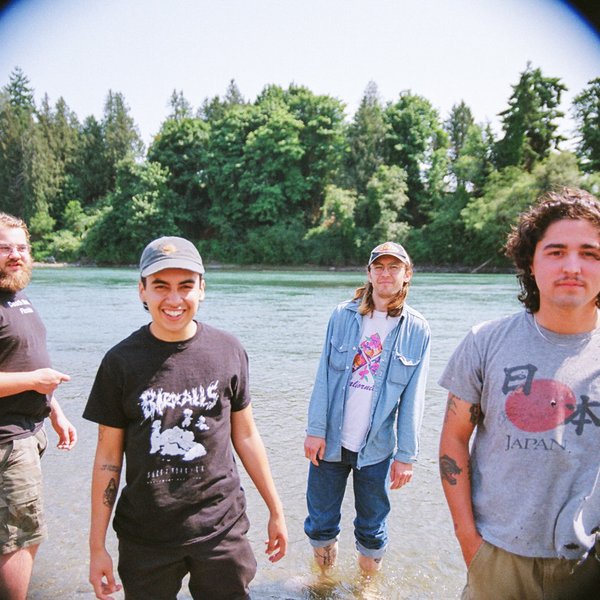
Martin Douglas travels to Bellingham (and through the world wide web) to speak with Bellingham's loudest, weirdest punk band.
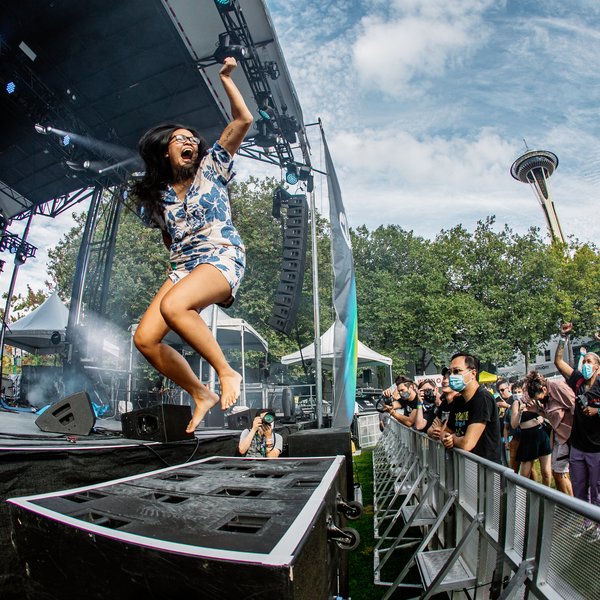
Martin Douglas speaks to the producer about convincing her parents to let her go to art school, "rockin' festivals with no album," and much more.


