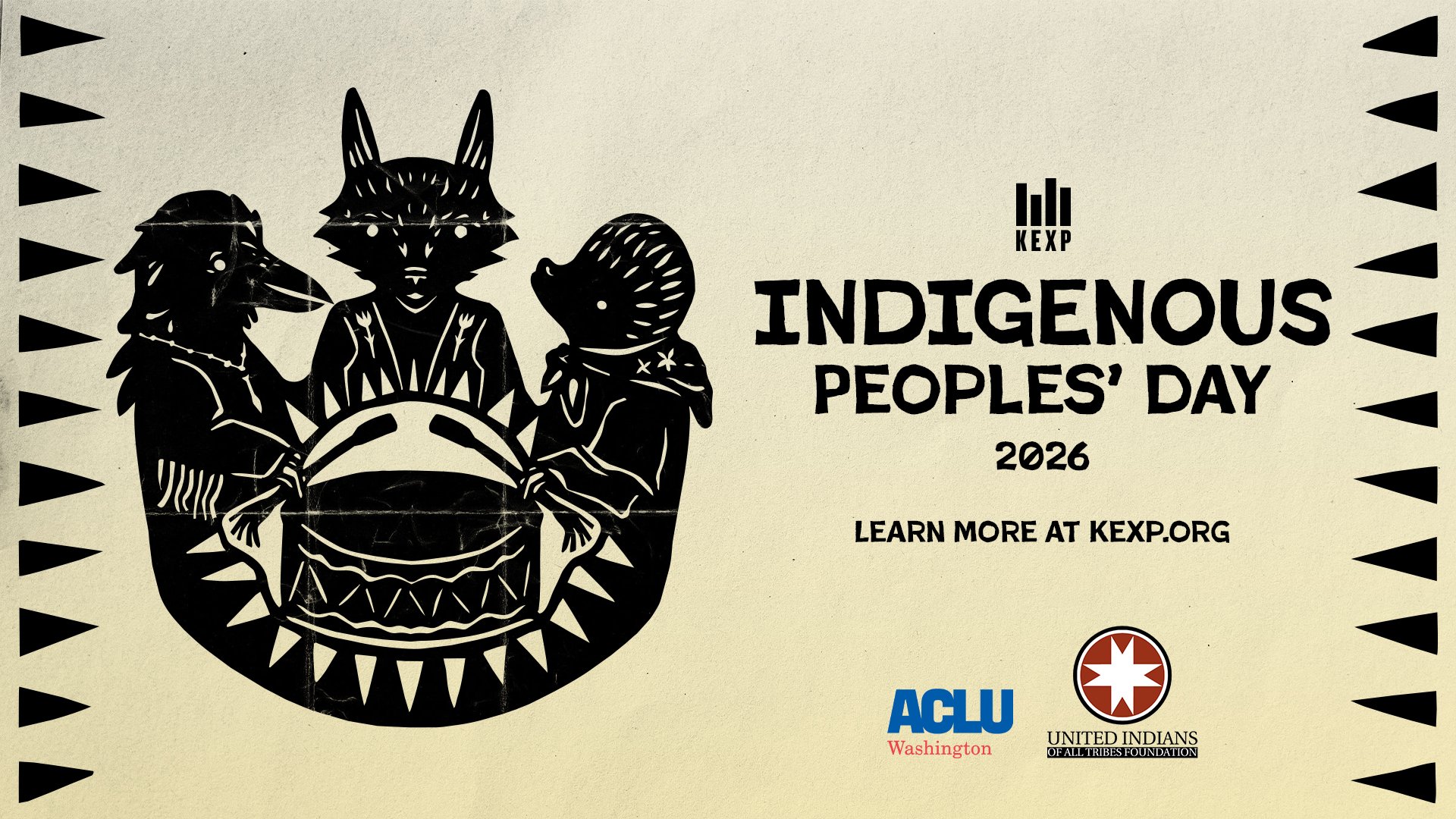
Join KEXP for Indigenous Peoples’ Day on Monday, October 12th, featuring a live broadcast from Daybreak Star Indian Cultural Center from 10 AM to 4 PM. All day, we’ll share music from people and communities actively resisting histories of colonization since time immemorial. Hosted by Dirk Whitebreast, Kevin Sur, and more KEXP DJs and special guests.
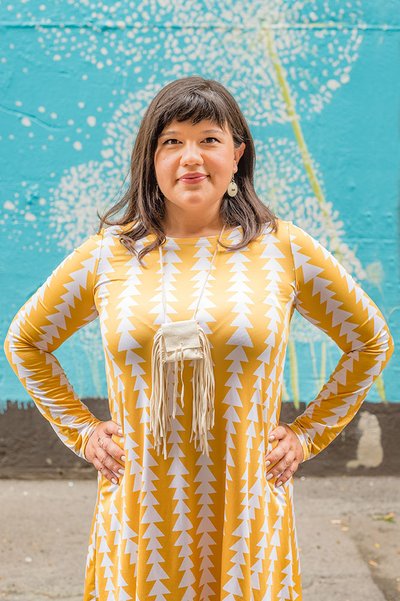
Emma Noyes (Confederated Tribes of the Colville Reservation: Sinixt and Colville Tribes) is an artist and researcher rooted in the traditional life-ways and homelands of her tribes. She grew up in Omak, WA and attended the University of Washington, where she was instrumental in establishing the recognition of Indigenous Peoples Day in 2009.
Through her artwork, Emma strives to contribute to and expand upon a legacy of Plateau artists communicating the visual universe of Plateau Indigeneity. She is particularly drawn to representing storied geographies where animal people and other sacred beings shaped the world we live in today and gave us our first teachings. She does this through illustration, painting murals, and writing, including her book Baby Speaks Salish (2020). Recently, Emma began creating what she calls story-cuttings, inspired by both her Indigenous and Scandinavian heritage. This form of Plateau paper art is created with scissors and paper and usually begins with zero guiding sketches. Emma lives in Spokane, WA, on the traditional homelands of the Spokane Tribe, where she works as Inatai Foundation's research director from a combined office and tiny art studio. She streams KEXP everyday and always tunes in to Sounds of Survivance so her two children can listen to the radio broadcast that she wishes existed when she was a child.
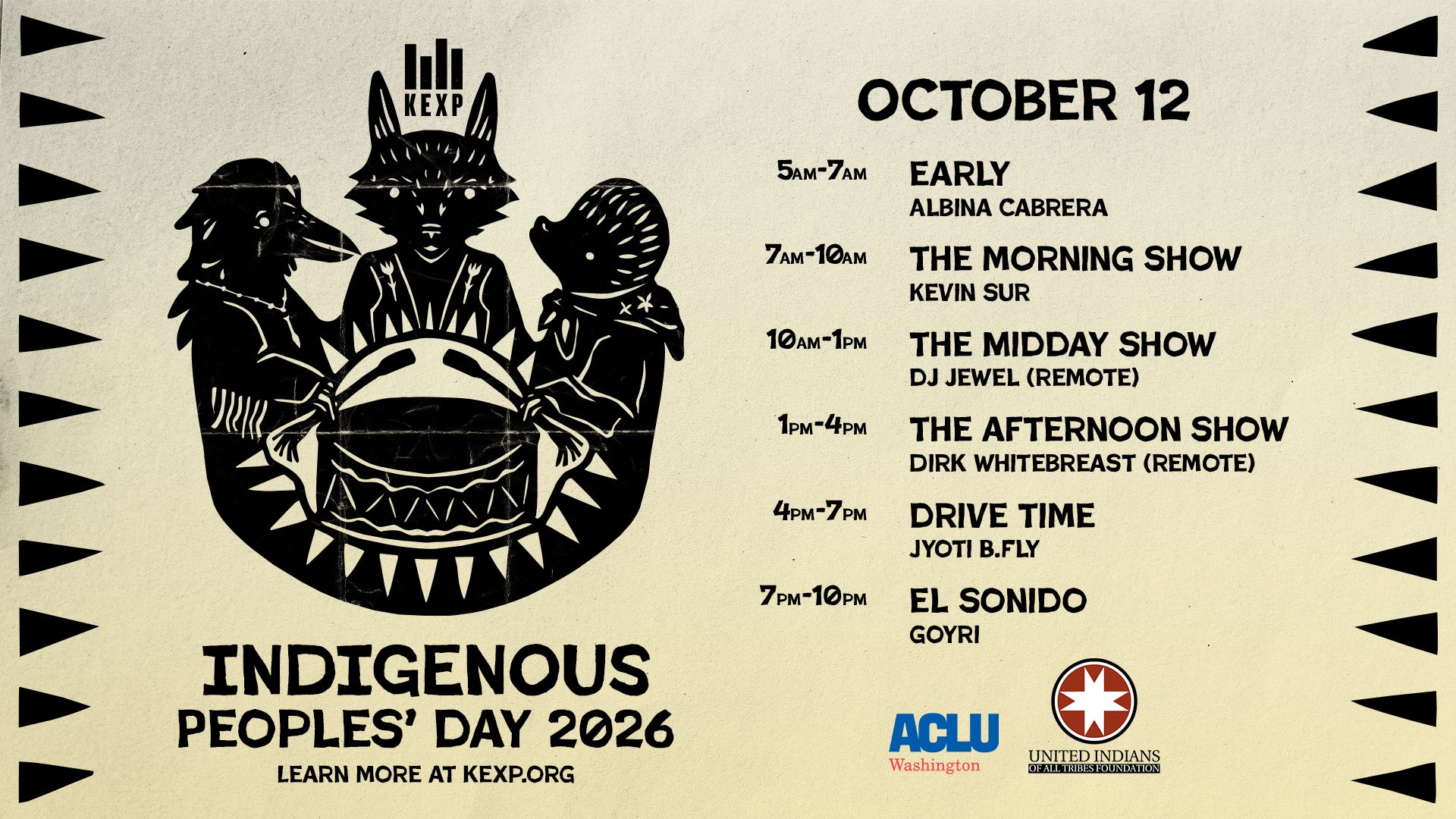
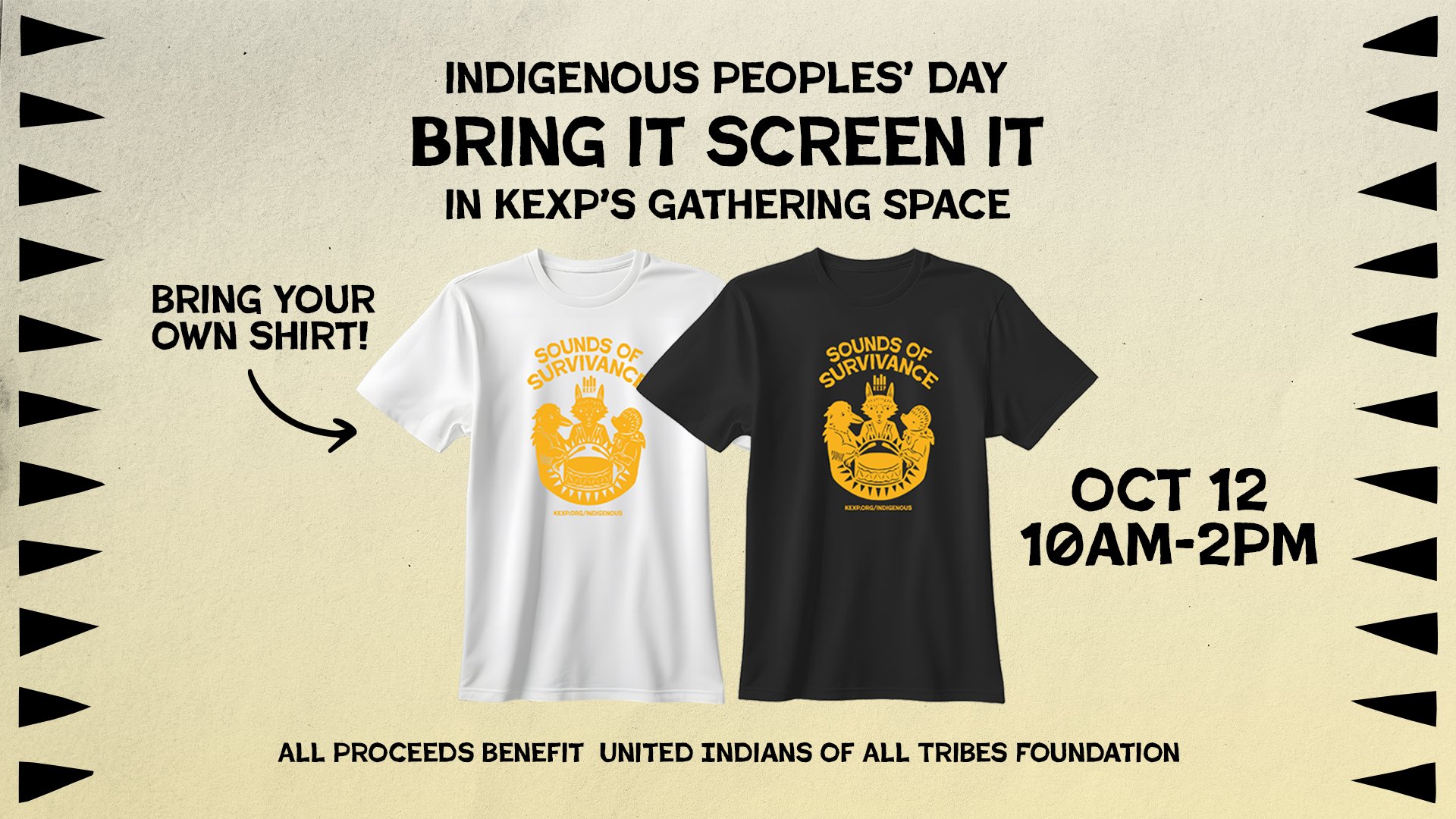
In this story-cutting, Mole, her husband Coyote, and his coastal parallel trickster presence, Raven, are ready for Indigenous people to take a seat and join them on the big drum. This summer I witnessed my nine year old daughter singing like never before. We were on a canoe journey in our Sinixt homelands and she was singing and drumming each day with kids and adults of all ages. When she joined in on the big drum at the culminating canoe landing on July 1 (Canada day), my cousins and community members confirmed my sense that she was coming out with such a remarkable voice. It was clear to us all that her time on our waters and lands were a part of how her gifts were finding their way to her. I was raised with the teaching that our purpose in life is to recognize our gifts, to hone those gifts, and then use our gifts to help the people. Gifts are not just innate talents that our community sees in us at a young age and reminds us to follow. Gifts include our emotions, the ways we fill our human responsibility to bring balance and renewal to the world, and our gift of visualizing what is possible and making it so. Music is a gift that connects us all. For my people, a song is one of the most powerful connectors and medicines. Music connects across time, between spirits, and to very specific places. As Indigenous people, our actions to counter colonial narratives and observances are also an expression of our gifts. We share music, story, and togetherness on Indigenous Peoples Day as a commitment and reminder to the beauty and joy that is inherent to our ways of being. We express our sorrow, we celebrate our resistance, and we pull our future generations closer to the world that we would have wanted for our ancestors, our elders, and ourselves. A world waiting for us, a world that Indigenous and non-Indigenous people will continue to bring to reality, emerging like a story-cutting waiting inside of the page.


